Cost of warehouse management system: Unpacking 2026 Costs and ROI

Figuring out the total cost of a warehouse management system (WMS) goes far beyond a simple software fee; it is a full-blown investment in your operational future. For Australian businesses, this can swing from a few thousand dollars a year for a basic cloud setup to hundreds of thousands for a complex, on-premise installation. Think of it less as a purchase and more as an ongoing commitment to efficiency.
A Snapshot of Your WMS Investment in 2026
It is helpful to think about the cost of a WMS like planning a new building. You have the initial architect and construction fees, which are your one-time implementation and hardware costs. Then you have the ongoing utility bills, which are your recurring software subscriptions and support fees. This way of thinking helps you budget for the whole financial picture, not just the sticker price.
With Australian e-commerce growing at such a breakneck pace, this kind of investment is quickly becoming a competitive must-have. Customers expect speed and accuracy, and manual processes with spreadsheets just cannot keep up. A WMS is the engine you need to scale your operations and meet modern fulfillment demands.
The Financial Reality for Australian Businesses
This push for greater efficiency is fueling some serious market growth. According to a 2023 study by Mordor Intelligence, the Australian warehouse management systems market was valued at USD 101.96 million and is projected to grow significantly, reflecting a broader Asia-Pacific trend. This surge is all about the need for real-time inventory visibility and optimized workflows.
For a growing business finally graduating from spreadsheets, the initial WMS setup might cost around 5-10% of annual warehouse operating costs. But the payback often comes surprisingly fast. A study published in the Journal of Business Logistics highlighted that WMS implementations can lead to a return on investment within 12-18 months, driven by throughput boosts of 15-25% and massive reductions in costly errors.
Investing in a WMS is not really about buying software; it is about buying control. It gives you the power to see, direct, and optimize every single movement within your four walls, turning operational chaos into a predictable and profitable process.
Estimating Your Initial and Ongoing Costs
To build a budget that will not give you any nasty surprises, you have to separate the one-time expenses from the recurring ones. While every project has its own unique quirks, we can map out some typical cost ranges for businesses of different sizes. To get a better feel for how a WMS actually works inside a facility, you can check out our guide on the fundamentals of a WMS warehouse.
Here is a general breakdown of what Australian businesses can expect to invest, separating the initial setup from the annual software fees.
Estimated Cost of Warehouse Management System Breakdown by Business Size (AUD)
This table gives you a ballpark idea of the costs involved, broken down by business scale. Remember to account for both the upfront hit and the ongoing subscription.
Business Size | One-Time Costs (Implementation, Hardware) | Annual Recurring Costs (SaaS Subscription) |
|---|---|---|
Small Business | $5,000 - $20,000 | $10,000 - $30,000 |
Medium Business | $20,000 - $100,000 | $30,000 - $80,000 |
Large Enterprise | $100,000 - $500,000+ | $80,000 - $250,000+ |
Of course, these numbers are a starting point. Your final cost will depend on how complex your operation is, how many users you have, and the level of customization you need. The next sections will dive deeper into what makes up each of these costs.
Decoding Common WMS Pricing Models
When you dive into the world of WMS pricing, you will quickly realize there is no single price tag. Vendors structure their costs in different ways, and understanding these models is the first step to choosing a system that fits your budget and your operational reality.
Getting this wrong can be costly. You might end up paying for features you never use or find yourself hit with unpredictable fees that throw your financial planning into chaos.
At its core, WMS pricing boils down to two main approaches: a perpetual license versus a Software-as-a-Service (SaaS) subscription. Think of it like buying versus renting. A perpetual license is a large, one-time payment to own the software forever, which is common with on-premise systems. A SaaS model, on the other hand, is a recurring fee to access the software, usually hosted in the cloud.
The image below shows how the software cost is just one piece of the puzzle, fitting into the larger picture of your warehouse investment.

Just like you pay utility bills after building a house, the software fee is an ongoing cost to keep your digital operations running smoothly.
Subscription-Based Models
Today, the SaaS subscription model is dominant in the WMS world. Its lower upfront cost and flexibility make it a natural fit for modern businesses. Instead of a massive initial outlay, you pay a predictable recurring fee. But even within the SaaS world, the pricing is not always the same.
User-Based Pricing: This is the most common model you will see. The cost is calculated per user, per month. For example, a vendor might charge $150 per user per month. This is simple and works well if you have a relatively stable team, like a small e-commerce business with five permanent warehouse staff.
Usage-Based Pricing: This ties your costs directly to how busy you are. Pricing could be based on orders processed, scans made, or SKUs managed. For instance, a third-party logistics (3PL) provider whose business swells during the holiday season would see their costs scale up with the increased order volume, then drop back down in quieter months, aligning expenses with revenue.
Tiered Plans: Vendors often package their features into different levels like Basic, Professional, or Enterprise. A growing online retailer could start on a basic plan for core inventory and order management for $500 per month, then upgrade to a professional tier with advanced reporting features as they expand and need more powerful tools.
Perpetual License Model
While not as common today, the perpetual license model is still available, especially for large enterprises with very specific security or customization requirements. This means a hefty upfront investment, often anywhere from $50,000 to over $200,000, for the software license alone.
While the big initial cost can be intimidating, a perpetual license means you will not have recurring software fees. But do not forget you will still have to pay for annual maintenance and support, which typically costs about 15-20% of the initial license fee every year.
This model gives you total control, as the software is installed on your own servers. It makes sense for businesses with the IT team and infrastructure to manage, maintain, and secure the system themselves. For most small to medium-sized Australian businesses, however, the flexibility and lower total cost of ownership of a SaaS model are far more attractive.
Which Model Is Right For You?
Choosing the right pricing model comes down to knowing your business, where it is now, and where you plan to take it. A SaaS subscription offers financial predictability and scalability, making it a powerful choice for most e-commerce retailers and 3PLs.
On the other hand, a large manufacturer with stable, complex workflows and a dedicated IT department might still find value in a perpetual license.
The best approach is to analyze how each model aligns with your cash flow and long-term strategy. Do not just look at the monthly sticker price; calculate the total cost of ownership over three to five years. That is how you make a decision you will not regret.
Budgeting for Costs Beyond the Software Licence
That first quote from a WMS vendor is just the starting line, not the finish. Any seasoned operations manager knows the sticker price is only one piece of the puzzle. To get the full picture, you have to look at the Total Cost of Ownership (TCO), which covers everything from one-off setup fees to the ongoing costs of keeping the system running.
Getting this wrong is one of the quickest ways to see a project go off the rails. Budget blowouts and delayed ROI are often the result of overlooking these "hidden" expenses. A realistic financial plan accounts for every cost needed to get the system live and keep your warehouse humming.

Unpacking One-Time Implementation Costs
Before your new WMS starts adding value, you will have to tackle a few significant upfront investments. These are the costs tied to getting the software configured, connected, and ready for your team to use.
System Customization: No two warehouses are the same. You will likely need the vendor to tweak workflows, reports, or dashboards to fit your unique operational needs. A practical example is customizing the picking logic to handle batch-picked items differently from single-item orders to maximize efficiency.
Data Migration: All that critical inventory and order history needs a new home. Moving it from spreadsheets or an old system into the new WMS is not just a copy-paste job. It often means cleaning, reformatting, and validating the data. For instance, you might need to convert SKU formats or standardize location names to ensure you are starting with accurate data.
Third-Party Integrations: Your WMS needs to talk to the rest of your tech stack. For most businesses, this means connecting to e-commerce platforms like Shopify, accounting software like Xero, and carriers like Australia Post. Each connection is a mini-project that adds to the initial scope and cost.
These upfront costs can be substantial. For mid-sized operations, particularly in a multi-client 3PL environment, it is not uncommon to see investments ranging from AUD 50,000 to AUD 500,000 for a scalable WMS. However, modern cloud platforms with streamlined integrations can help companies achieve faster growth by cutting overheads through better, centralized visibility.
Planning for Recurring Operational Expenses
Once you are live, the financial commitment does not stop. Several recurring costs are vital for keeping your warehouse operations running smoothly, and they go well beyond the monthly subscription fee.
Think of these as the ongoing maintenance and fuel for your warehouse’s new engine. You would not buy a high-performance car and then refuse to pay for premium fuel or oil changes. Skimping here means you simply will not get the performance you paid for.
To get a complete financial picture, your budget must account for these ongoing expenses.
Essential Recurring Costs Checklist
Hardware and Supplies: Your team needs the right tools to work with the WMS. This means barcode scanners, mobile devices for pickers, label printers, and rugged tablets for managers on the floor. These devices need to be maintained, replaced, and regularly restocked with supplies like labels and ink.
Comprehensive Staff Training: A WMS is only as effective as the people using it. Training is not a one-and-done event. You will need to train new hires and run refresher courses for existing staff, especially as new features are released, to ensure everyone is using the system correctly and efficiently.
Ongoing Technical Support: When things go wrong, you need reliable help, fast. Most vendors offer tiered support plans. A basic plan might be included, but a premium package with 24/7 support or a dedicated account manager will be an extra recurring cost. During peak season, that support can be priceless.
By carefully mapping out both one-time and recurring costs, you can build a budget that truly reflects the TCO. For a more hands-on approach, you can use our calculator to compare the TCO of 3DLogistiX against a typical WMS.
How to Calculate Your WMS Return on Investment
A warehouse management system is a strategic investment in your operational future, not just another software expense. But to get the green light, especially from the finance team, you need to prove its value in dollars and cents. This is not about vague promises of "better efficiency"; it is about building a rock-solid business case that shows exactly how a WMS will pay for itself.
Let's break down how to calculate your potential Return on Investment (ROI) and turn those operational benefits into a compelling financial story.

The Basic ROI Formula
At its heart, the ROI calculation is pretty simple. It weighs the financial gains you get from the WMS against what it costs you. Here is the formula:
ROI (%) = ( (Financial Gain from Investment - Total Cost of Investment) / Total Cost of Investment ) x 100
A positive ROI shows the system is making you more money than it costs. The higher that percentage, the better the investment. Now, let’s find the right numbers to plug in.
Identifying Your Financial Gains
This is where you connect the dots between operational improvements and real, quantifiable savings. You need to put a dollar value on every gain.
Labour Savings: This is almost always the biggest win. A WMS that guides pickers along optimized routes can slash travel time. For instance, if you cut the average pick time from 4 minutes to 3 and you handle 2,000 orders a day, you have just saved 2,000 minutes. This equals 33.3 hours of paid labor every single day.
Error Reduction: Mis-picks and shipping blunders are costly. They lead to returns, re-shipping fees, and unhappy customers. If your WMS cuts your error rate from an expensive 3% down to 0.5% on 5,000 monthly orders, you are preventing 125 costly mistakes every month. Just calculate the average cost to fix an error, which might be $50 including shipping and labor, and you will see savings of $6,250 per month.
Improved Inventory Accuracy: A WMS helps you stop losing money from overstocking and losing sales due to stockouts. According to research by IHL Group, stockouts and overstocks cost retailers nearly $1.1 trillion globally. Preventing just a handful of stockouts on your best-selling items means you can attribute that saved revenue directly to the system.
Better Space Utilization: By optimizing slotting and consolidating inventory, a good WMS helps you fit more product into the space you already have. This can delay or even eliminate the need for a hugely expensive warehouse move or expansion, which is a massive cost avoidance.
When tallying up your gains, it is also vital to factor in the broader benefits of system integration. A WMS that talks seamlessly with your other business systems does not just add value; it multiplies it.
Tallying Your Total Costs
For a true ROI picture, you must use the Total Cost of Ownership (TCO), not just the upfront software price. This means adding up all the one-time and recurring costs we talked about earlier.
A common mistake is to only use the first-year cost in the ROI calculation. A more accurate approach is to project gains and costs over a three to five-year period to understand the long-term financial impact.
A Practical ROI Calculation Example
Let's walk through an example with a fictional mid-sized retailer, "Rooftop Goods."
Total Projected WMS Cost (Year 1): $65,000
$40,000 annual SaaS subscription
$25,000 for implementation, new hardware, and team training
Projected Annual Financial Gains: $95,000
Labour Savings: $50,000 (Reduced picking time allows them to reallocate two full-time roles)
Error Reduction Savings: $30,000 (Far fewer returns and re-shipping costs)
Inventory Carrying Cost Savings: $15,000 (Less overstock and no more lost sales from stockouts)
Now, we plug these numbers into our formula for the first year:
ROI = ( ($95,000 - $65,000) / $65,000 ) x 100 = 46%
With a 46% ROI in the very first year, the financial argument for Rooftop Goods is crystal clear. We can also figure out the payback period, which is how long it takes for the investment to pay for itself:
Payback Period = Total Cost / Annual Financial Gain = $65,000 / $95,000 = 0.68 years (or about 8 months)
This is the kind of data-driven analysis that shifts the conversation from a debate over cost to a strategic discussion about investment. If you want to run your own numbers, try using our online WMS ROI calculator.
Actionable Strategies to Reduce Your WMS Costs
Let's be clear: the price tag on a powerful Warehouse Management Software can be intimidating. But getting the right system does not have to drain your budget. With some smart planning and savvy negotiation, you can dramatically lower the Total Cost of Ownership (TCO) without sacrificing the features you need to grow.
It all comes down to a shift in perspective. Do not think of a WMS as a one-time, all-or-nothing expense. See it as a scalable asset. A common pitfall is trying to switch on every single feature from day one, which is a fast track to overspending. The key is to focus on what delivers the most immediate value to your operation first.
Adopt a Phased Implementation Approach
Trying to do everything at once is a recipe for budget blowouts and a team that is completely overwhelmed. A much smarter, more cost-effective method is a phased implementation. This simply means you start with a core set of features that solve your biggest headaches, then add more advanced capabilities later as your team masters the system and the business grows.
For example, a direct-to-consumer brand could launch its WMS with just three core functions to get started:
Accurate Inventory Tracking: To put an end to costly stockouts and overstocking.
Guided Picking Paths: To get an immediate boost in labor efficiency.
Order Management Integration: To sync directly with its Shopify store and automate order flow.
By zeroing in on these priorities, the business sees a return on its investment much faster. More complex modules, like advanced slotting or cycle counting automation, can be rolled out in a second or third phase once the initial benefits are realized. This makes the upfront financial commitment far more manageable.
Choose a Cloud-Based SaaS Model
One of the most effective ways to control WMS costs is to choose a cloud-based Software-as-a-Service (SaaS) model. This fundamentally changes the financial equation of acquiring a warehouse management system.
Instead of a massive upfront capital expenditure for a perpetual license and on-premise servers, a SaaS subscription converts the cost into a predictable, manageable operating expense. This frees up capital that can be invested elsewhere in the business, like in inventory or marketing.
This model also removes the need for a large in-house IT team to worry about server maintenance, security patches, and software updates. All of that is handled by the vendor and baked into your subscription fee, further cutting your long-term operational costs and letting you focus on what you do best.
Negotiate Smartly with Vendors
Never be afraid to negotiate with potential WMS providers. While a price list might look set in stone, there is often room for flexibility if you come to the table prepared. The trick is to ask sharp, specific questions that prove you have done your homework.
Before you sign any contract, make sure you get crystal-clear answers to these critical questions:
Scalability: "What are the exact costs for adding more users, processing more orders, or connecting another warehouse down the line? Are there price breaks at certain volumes?"
Support Plans: "What is included in the standard support package, and what are the specific response times? What is the extra cost for a premium or 24/7 support plan?"
Future Updates: "Are all future software updates and new feature releases included in our subscription fee, or will we face extra charges for major upgrades?"
Contract Terms: "Can we get a discount for committing to a longer term, like a two- or three-year agreement instead of paying annually?"
Having these conversations upfront helps you sidestep unexpected expenses and ensures you are partnering with a vendor whose pricing truly aligns with your growth strategy.
How Visual WMS Features Drive Tangible Savings
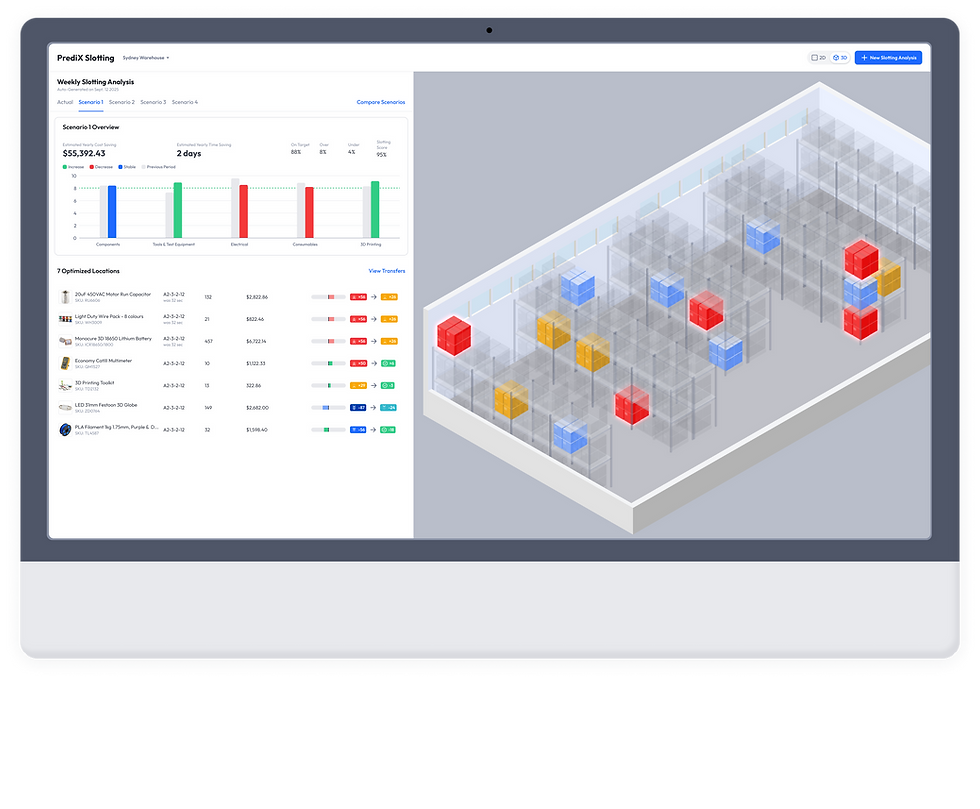
While older WMS platforms rely on endless tables and text reports, modern systems offer a far more intuitive and powerful way to run your warehouse. Visualization features, like the 3D digital twin in 3DLogistiX, turn complex operational data into an interactive, real-world model of your facility. This shift from deciphering spreadsheets to actually seeing your warehouse in action is where the real savings begin.

Instead of just looking at analytics, a visual interface allows managers to spot bottlenecks, find wasted space, and see operational problems with their own eyes. It makes abstract numbers concrete and actionable, directly speeding up the return on your warehouse management system cost.
From Virtual Plans to Real-World Savings
One of the clearest ways visual features impact your bottom line is by letting you test changes virtually before you commit expensive, real-world resources. Reorganizing a warehouse layout or re-slotting inventory is famously disruptive and costly. A 3D digital twin gives you a risk-free sandbox to experiment with new ideas.
By simulating proposed changes in a digital environment, managers can validate improvements and identify potential problems without moving a single pallet or disrupting a single workflow. This 'measure twice, cut once' approach prevents costly mistakes and ensures layout changes deliver genuine efficiency gains from day one.
For example, you can test how moving your fastest-selling products closer to the packing stations will cut picker travel time and improve throughput. Seeing the simulated impact confirms the financial benefit before you invest staff hours into the physical reorganization.
Making Smart Decisions Visually
Advanced platforms use this visual interface to power intelligent features that directly reduce costs. A great example is 'Place Smart' technology, which optimizes where products are stored based on demand, seasonality, and how often they are picked. The system does not just give you a list of location changes; it shows you precisely where items should go within the 3D model of your warehouse for maximum efficiency.
This directly tackles one of the biggest labor costs in any warehouse: picker travel time. By visually guiding the placement of high-demand items into optimal forward-picking locations, the system ensures your team spends less time walking and more time picking. Those small time savings add up to thousands of dollars in reduced labor costs over a year.
Accelerating Staff Onboarding and Performance
Training new staff is another significant operational expense. A visual WMS is a powerful tool for faster, more effective onboarding. New team members can learn warehouse layouts, picking routes, and standard procedures in a simulated, interactive environment.
This has several clear financial benefits:
Reduced Training Time: New hires get up to speed much faster, becoming productive members of the team in a fraction of the usual time.
Lower Error Rates: Training in a risk-free virtual space means their initial mistakes do not result in costly picking or packing errors.
Improved Safety: Staff can familiarize themselves with the facility layout and safety protocols before setting foot on a busy warehouse floor.
Ultimately, connecting innovative features directly to financial performance is what separates a standard WMS from a strategic one. By making operations visible and interactive, these tools provide a faster, more tangible payback on your investment.
Frequently Asked Questions About WMS Costs
Even after we have broken down all the numbers, it is natural to have a few more questions pop up when you are thinking about the real-world cost of a WMS. Let's tackle some of the most common ones we hear from businesses just like yours.
Is a Free or Open-Source WMS a Good Way to Save Money?
While the idea of a "free" WMS sounds fantastic on the surface, these open-source platforms often come with serious hidden costs that can quickly add up. When you go this route, you are not just getting software; you are taking on the full responsibility of being a software company.
This means your team is on the hook for the entire implementation, all customizations, data migration, security, ongoing maintenance, and internal tech support. For most businesses, the time, money, and specialized technical staff required to manage all that far outweighs the cost of a commercial solution that handles it all for you.
How Long Does It Take to See ROI from a WMS?
The exact timeline depends on how complex your operation is, but many small to medium-sized businesses start seeing a positive return within 12 to 24 months.
This is not just a future projection; it is driven by immediate, measurable wins. Things like optimized picking routes that boost labor efficiency, near-perfect inventory accuracy, and a huge drop in expensive shipping mistakes all put money back into your business from day one.
A well-implemented WMS does not just promise future gains; it delivers tangible financial benefits that start accumulating almost immediately. The key is to track these improvements from the moment you go live to clearly see your investment paying for itself.
Can I Negotiate the Price with a WMS Vendor?
Absolutely. There is almost always room to negotiate on a WMS proposal. Think of a vendor's first quote as a starting point for a conversation, not the final price.
Come to the table prepared to talk about a few key areas:
User Licenses: Can you get a better rate if you commit to a certain number of users or different tiers?
Contract Length: Vendors often offer a discount on the monthly or annual fee for a longer-term commitment.
Implementation Fees: Get a detailed breakdown of what is included and see if any services can be adjusted or removed.
Support Packages: Ask if a premium support plan can be bundled in at a reduced rate as part of the deal.
The better you understand your own operational needs, the more specific your questions can be. This preparation puts you in a much stronger position to negotiate a deal that truly works for your budget.
Ready to see how a visual WMS can transform your warehouse and deliver a faster ROI? Explore 3DLogistiX to discover how our interactive 3D digital twin turns operational data into actionable savings.
Contact us for a free, no-obligation total cost comparison and live demo today. Email michelle@3dlogistix.com or call 1800 560 724
For more information, visit https://3dlogistix.com